


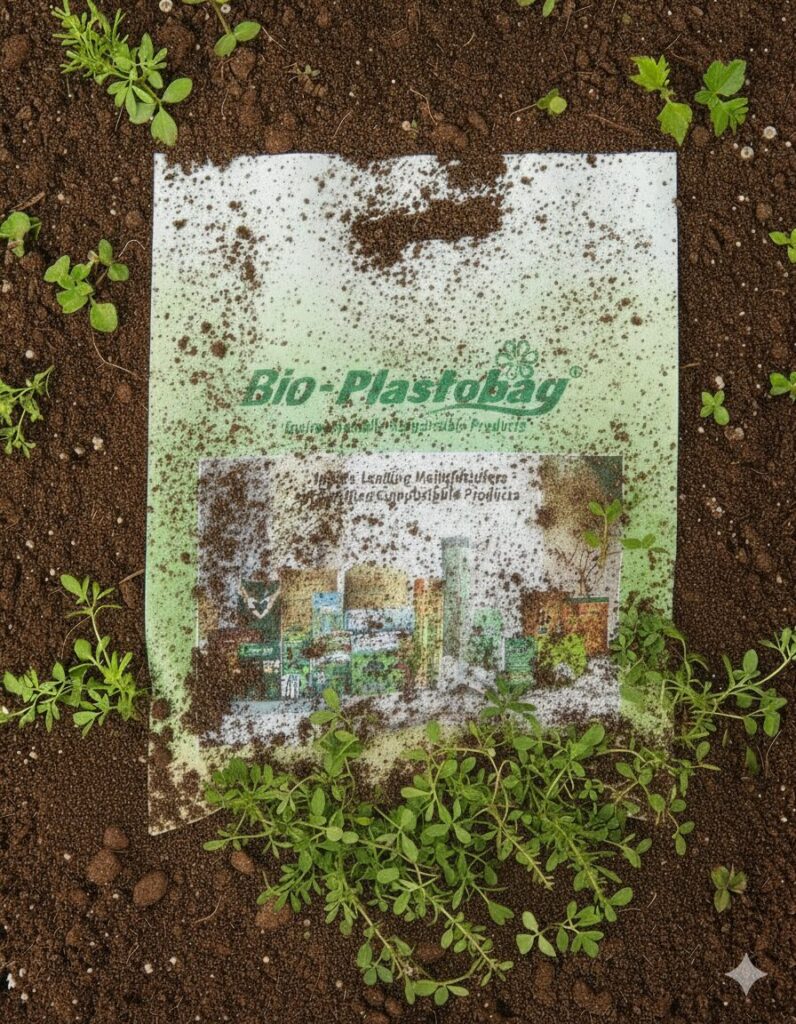
You’ve decided to move toward sustainable packaging. You’ve explored compostable options, understood the benefits, and started considering the switch.
Then comes the obvious question:
What’s the point of compostable packaging without composting facilities?
It’s a fair concern and one that many businesses and consumers share.
Compostable packaging is designed to break down under specific conditions. So if those conditions don’t exist locally, does it still make sense?
The short answer: yes,but not for the reasons most people think.
Understanding Compostable Packaging Without Composting
Compostable packaging is designed to break down into natural elements like water, carbon dioxide, and organic matter in controlled composting environments.
In industrial facilities, this happens efficiently often within a few months.
Without those facilities:
- The process slows down
- Conditions are less controlled
- Decomposition may take longer
And that’s where the confusion starts.
Many assume that without composting infrastructure, compostable packaging loses its purpose. It doesn’t it just changes the way its value shows up.
What Happens Without a Composting Facility?
If compostable packaging is disposed of in regular waste, it won’t break down as quickly as it would in a composting system.
But here’s what still matters:
Unlike plastic, compostable materials are designed to:
- Break down into non-toxic components
- Avoid leaving harmful residues
- Reduce long-term environmental impact
Plastic behaves very differently:
- It can persist for hundreds of years
- It breaks down into microplastics
- It continues to pollute ecosystems over time
So while composting speeds things up, the material itself is still a better choice.
It Still Reduces Plastic Pollution
 Even without composting, switching to compostable packaging reduces dependence on conventional plastic.
Every compostable bag used means:
- One less plastic bag entering the environment
- Less long-term waste accumulation
Plastic doesn’t disappear it fragments and spreads.
Choosing better materials helps reduce that long-term damage, even if disposal systems aren’t perfect.
Adoption Drives Infrastructure
Composting systems don’t appear overnight they grow with demand.
When more businesses adopt compostable packaging:
- Demand for composting increases
- Infrastructure becomes more viable
- Investment and policy begin to follow
In simple terms:
Change doesn’t wait for systems—systems follow change.
Early adoption plays a role in making better waste solutions possible.
It Strengthens Your Brand
 Customers don’t expect perfection but they do notice intent.
Choosing compostable packaging signals:
- Awareness
- Responsibility
- Forward thinking
Even without composting access, customers understand the effort.
And that influences:
- Purchase decisions
- Brand perception
- Long-term loyalty
Sustainability today is not just operational it’s reputational.
Better Materials Still Matter
Compostable packaging is made from plant-based or bio-based materials rather than fossil fuels.
That means:
- Lower environmental impact during production
- Reduced reliance on petroleum
- Safer breakdown compared to plastic
Even outside ideal conditions, the overall lifecycle is still more sustainable.
What Can You Do Without Composting Facilities?
 If infrastructure is limited, you still have options:
Encourage Better Disposal
Help customers:
- Understand how to compost at home (where possible)
- Separate waste correctly
Work With Local Collectors
Some local vendors handle:
- Organic waste
- Small-scale composting
Even basic partnerships can help.
Communicate Clearly
Simple instructions on packaging:
- “Compost where possible”
- “Dispose with organic waste”
This improves how the product is handled after use.
Explore Internal Solutions
For larger businesses:
- Small composting setups
- Partnerships with commercial composters
These are becoming more accessible over time.
Progress Over Perfection
Sustainability isn’t about waiting for perfect systems it’s about making better decisions now.
If every business waited for ideal infrastructure:
- Nothing would change
- Demand would never grow
- Systems would never develop
Instead, progress happens when:
- Businesses act
- Consumers respond
- Systems evolve
That’s where things stand today especially in growing markets.
Compostable vs Plastic: A Simple Reality
| Factor | Plastic | Compostable |
|---|---|---|
| Breakdown time | Hundreds of years | Faster (even if slower outside composting) |
| Residue | Microplastics | Non-toxic |
| Source | Fossil fuels | Plant-based |
| Impact | Long-term pollution | Lower impact |
Even without composting, the difference is clear.
So, Is It Still Worth It?
Yes.
Because the value of compostable packaging isn’t only in how it’s disposed it’s in what it replaces.
It:
- Reduces plastic dependency
- Supports better systems
- Strengthens your brand
- Moves your business in the right direction
Final Thought
Compostable packaging without composting still has a point.
It’s not about perfect outcomes it’s about better choices.
And those choices add up.
If you’re considering a switch, don’t let infrastructure limitations stop you.
Start where you are. Improve what you can. And move forward.