


When people think about climate action, they often picture solar panels, electric vehicles, wind farms, or large-scale renewable energy projects. While these innovations are essential, climate action is also shaped by the everyday choices made by businesses and consumers including the packaging we use, the waste we generate, and how we manage it.
Packaging has become an integral part of modern life. It protects food, preserves products, simplifies transportation, and enhances convenience. Yet conventional plastic packaging carries a significant environmental cost. Produced primarily from fossil fuels, plastic contributes to greenhouse gas emissions throughout its lifecycle from extraction and manufacturing to transportation and disposal. Once discarded, much of it persists in the environment for centuries, creating long-term pollution while offering little opportunity to recover its original value.
As countries work toward ambitious climate goals and businesses strengthen their sustainability commitments, packaging is undergoing a transformation. Certified compostable products are emerging as an important part of this shift. While they are not a universal replacement for every type of plastic, they provide a practical solution for many applications where organic waste and packaging can be managed together.
In this article, we’ll explore how compostable products support climate action, contribute to a circular economy, and help businesses and consumers move toward a more sustainable future.
Understanding Climate Action Beyond Energy
Climate action encompasses every effort aimed at reducing greenhouse gas emissions, conserving natural resources, and building more sustainable systems.
Although energy production and transportation account for a significant share of global emissions, materials and waste management also play a critical role. Every product we manufacture, purchase, use, and discard requires raw materials, energy, transportation, and disposal all of which influence its environmental footprint.
Packaging, despite its short lifespan, is produced in enormous quantities every day. Small improvements in packaging materials, waste reduction, and end-of-life management can therefore have a meaningful cumulative impact.
Climate action isn’t only about producing cleaner energy it’s also about designing smarter products and using resources more responsibly.
The Carbon Footprint of Conventional Plastic Packaging
Most traditional plastics are derived from petroleum or natural gas. Before a plastic bag or food wrapper reaches a customer, it has already gone through several carbon-intensive stages:
-
- Extraction of fossil fuels
-
- Refining and processing raw materials
-
- Polymer manufacturing
-
- Product manufacturing
-
- Transportation
-
- Distribution
Once used, many plastic products are either landfilled, incinerated, or leak into the environment.
Incineration releases additional greenhouse gases, while landfilled plastics can remain intact for hundreds of years without returning valuable nutrients to the environment.
As demand for plastic continues to increase worldwide, reducing reliance on conventional single-use plastics has become an important part of many sustainability strategies.
How Compostable Products Support Climate Action
Certified compostable products are designed to break down into water, carbon dioxide, biomass, and nutrient-rich compost under appropriate composting conditions. Their environmental value extends beyond simply replacing plastic.
Supporting Organic Waste Diversion
Food waste is one of the largest contributors to landfill methane emissions. Compostable food packaging and compostable liners can help collect food scraps more efficiently, making it easier to divert organic waste to composting facilities instead of landfills.
When organic waste is composted, valuable nutrients can be returned to the soil rather than becoming a source of methane in landfill environments.
Encouraging Better Waste Management
Compostable products work best within well-designed waste management systems. They encourage greater awareness of waste separation and support composting infrastructure that benefits both households and businesses.
Reducing Persistent Plastic Pollution
Unlike conventional plastics that may persist in the environment for centuries, certified compostable products are designed for controlled biological breakdown under specified composting conditions.
This helps reduce the accumulation of long-lasting plastic waste in appropriate applications where composting systems are available.
Supporting the Circular Economy
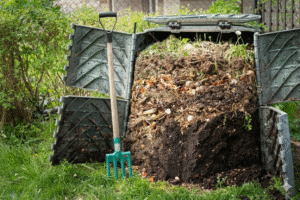 A circular economy aims to keep resources in use for as long as possible while minimising waste.
Traditional linear systems follow a “take, make, dispose” model.
A circular system instead focuses on:
-
- Designing products responsibly.
-
- Recovering valuable materials.
-
- Returning biological materials safely to nature.
-
- Reducing unnecessary waste.
Certified compostable products contribute to this vision by offering packaging designed to integrate with organic waste streams where suitable.
Instead of becoming long-term pollution, compostable materials can become part of nutrient cycles through managed composting.
Helping Businesses Meet Sustainability Goals
Businesses across industries are setting ambitious environmental targets.
Many organisations are working to:
-
- Reduce plastic consumption.
-
- Lower carbon emissions.
-
- Improve ESG performance.
-
- Meet customer sustainability expectations.
-
- Prepare for evolving environmental regulations.
Switching to certified compostable packaging where appropriate can support these broader sustainability initiatives while demonstrating a commitment to responsible resource management.
For food service providers, retailers, hospitality businesses, healthcare facilities, and agriculture, compostable products may offer practical solutions that align environmental responsibility with operational needs.
Empowering Consumers to Make Better Choices
Climate action is not limited to governments and corporations.
Consumers influence markets every day through purchasing decisions.
Choosing products packaged in certified compostable materials, reducing unnecessary waste, supporting responsible disposal practices, and participating in composting programs all contribute to broader sustainability goals.
Small individual actions, when multiplied across millions of people, can create meaningful environmental change.
This highlights an important reality:
Climate action begins with everyday decisions.
Innovation Is Driving the Future of Sustainable Packaging
The packaging industry continues to evolve rapidly.
Researchers and manufacturers are developing new materials that improve performance while reducing environmental impact.
Advances in compostable polymers, renewable feedstocks, barrier technologies, and manufacturing processes are helping businesses meet growing demand for sustainable packaging solutions without compromising functionality.
Innovation remains one of the strongest drivers of climate-positive packaging.
Bio-Plastobag’s Commitment to Sustainable Innovation
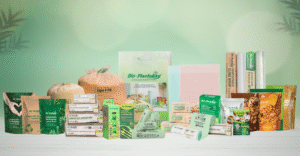 At Bio-Plastobag, sustainability is integrated into product development and manufacturing.
The company offers a broad portfolio of certified compostable packaging solutions, including grocery bags, carry bags, garbage bags, cling wrap, laundry bags, pet waste bags, and agricultural films designed for businesses seeking environmentally responsible alternatives.
By focusing on quality, certification, and continuous innovation, Bio-Plastobag supports organisations that are working toward reducing their environmental footprint while maintaining product performance.
Frequently Asked Questions
How do compostable products help the environment?
Certified compostable products can help reduce persistent plastic pollution, support organic waste diversion, and contribute to a circular economy when used and disposed of correctly.
Are compostable products carbon neutral?
Not necessarily. Like all manufactured products, compostable items have an environmental footprint. However, they can contribute to broader climate action strategies by reducing reliance on conventional plastics in appropriate applications and supporting sustainable waste management.
Can compostable packaging replace all plastic?
No. Compostable packaging is most effective for specific applications, particularly where it complements organic waste collection and composting systems.
Why is composting important for climate action?
Composting helps recycle organic materials into nutrient-rich compost and can reduce methane emissions associated with organic waste decomposing in landfills.
What should businesses consider before switching to compostable packaging?
Businesses should evaluate product requirements, local composting infrastructure, certification standards, and waste management practices to ensure compostable packaging is used effectively.
 Addressing climate change requires action across every sector of society, and packaging is no exception. While no single solution can solve the climate crisis, certified compostable products represent an important step toward reducing dependence on conventional plastics, supporting better organic waste management, and advancing the principles of a circular economy.
Their greatest impact comes when they are used in the right applications, paired with appropriate composting infrastructure, and integrated into broader sustainability strategies. For businesses, adopting certified compostable packaging can reinforce environmental commitments while meeting the growing expectations of customers, partners, and regulators.
At Bio-Plastobag, this vision is reflected in a commitment to developing certified compostable packaging solutions that balance functionality with environmental responsibility. By embracing innovation and encouraging more sustainable choices, businesses and consumers alike can play a meaningful role in climate action one product, one package, and one decision at a time.